
quince jelly jam recipe

The Best quince jelly jam recipe
Health-wise, quince jelly is a great option because it’s packed with natural sugars from the fruit itself rather than refined ones. Quince is rich in fiber, vitamin C, and antioxidants, which makes it a lighter alternative to store-bought jams that often contain added sugars and preservatives. It’s also a great way to use up that one quince that’s overripe or that just doesn’t get eaten fast enough—no waste, no fuss. And because it’s so versatile, it’s perfect for both casual meals and special occasions. You can drizzle it over pastries at a brunch, serve it with grilled meats at a BBQ, or just enjoy it straight from the jar with a slice of crusty bread. It’s that kind of recipe that feels like it belongs in every season, every meal, and every little moment in between.
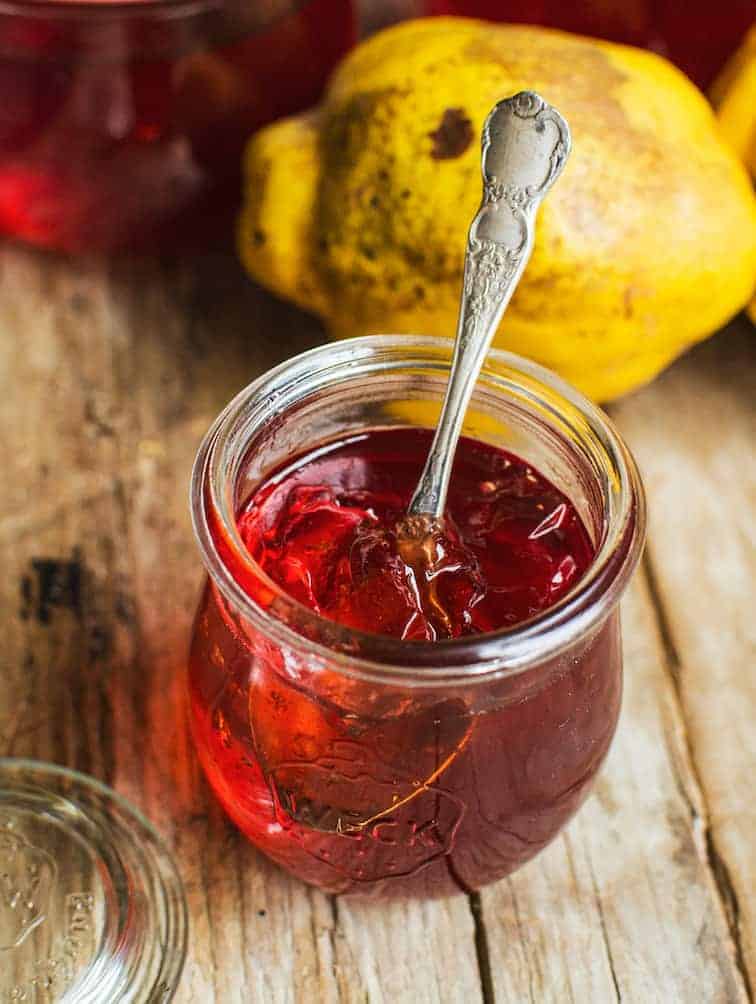
Classic Quince Jelly (Dulce de Quince)
A traditional Spanish jam made from simmered quince, offering a sweet-tart flavor perfect for toast, cheese boards, or desserts. This recipe is a must-try for any occasion.
🥘Ingredients
- 1 kg (2.2 lbs) ripe quince, peeled and sliced
- 1 cup granulated sugar
- 1 cup water
- 1 cinnamon stick
- 4 whole cloves
- 1 tsp vanilla extract
- 1 tbsp lemon juice
👨🍳Directions
-
1
Preheat oven to 200°F (95°C) to keep quince warm while cooking. -
2
Place sliced quince in the oven and bake for 20–25 minutes until soft. -
3
Remove quince from oven and let cool slightly. Transfer to a pot and add water, sugar, cinnamon, cloves, vanilla, and lemon juice. Stir well. -
4
Bring to a gentle boil, then reduce heat and simmer uncovered for 1 hour, stirring occasionally, until quince is completely soft and mixture thickens. -
5
Use an immersion blender to puree the mixture until smooth. Strain through a fine-mesh sieve to remove seeds and spices. -
6
Pour jam into clean jars, leaving ½-inch headspace. Seal tightly and store in a cool, dark place for up to 6 months.
🔧Equipment
- Large pot
- Immersion blender or food processor
- Fine-mesh strainer
- Silicone spatula
- Clean jars with lids
📊Nutrition Facts (per serving)
📝Notes
- Ensure quince is ripe for best flavor—it should yield easily when pressed.
- For a smoother texture, blend quince with a little water before simmering.
- Adjust sugar to taste; traditional recipes often use 1:1 quince-to-sugar ratio.
- Store in the fridge for up to 3 months if not using within 6 months.
Watch Video Of How Classic Quince Jelly (Dulce de Quince) Works
❓ Frequently Asked Questions About Quince Jelly (Dulce de Quince)
1. What is the traditional ratio of quince to sugar in the classic quince jelly recipe?
The traditional ratio is about 1 part sliced quince to 2 parts granulated sugar, though some recipes adjust based on quince freshness and desired sweetness. For example, 1 pound (about 1.5 cups) of finely diced quince calls for roughly 3–4 cups of sugar. Always taste as you go—quince can vary in acidity.
2. Why does the quince need to be peeled and seeded before cooking?
Peeling removes the tough outer skin, while seeding removes the hard core and seeds, which can be bitter or fibrous. The flesh must be finely diced to ensure even cooking and a smooth texture. If you’re using a food processor, pulse the quince into small pieces to avoid over-processing into a paste.
3. How long should the quince jelly simmer, and what temperature is ideal?
Simmer the mixture on medium-low heat until it thickens to a jam-like consistency—typically 25–30 minutes, depending on the quince’s firmness. The jelly should coat the back of a spoon but not be too runny. Avoid boiling vigorously, as it can break down the pectin in the quince and result in a thinner consistency.
4. Can I substitute other fruits or ingredients for quince in this recipe?
While quince is the star, some substitutes can work in a pinch:
– Pears or apples (for a sweeter, softer texture)
– Citrus zest (like lemon or orange) to add brightness
– A splash of apple cider vinegar (½–1 tsp) to boost acidity and help thicken.
However, the flavor and texture will differ significantly—quince’s unique tartness and almond-like notes are hard to replicate perfectly.
5. How do I know when the quince jelly is ready for canning or storage?
The jelly is done when it reaches a jelly stage—it should hold its shape when dropped into cold water and not drip through a fine-mesh sieve. For canning, it must also pass a bottle test (fill a clean bottle halfway with hot jelly, let it cool, then tilt it—if it holds, it’s ready). Store in sterilized jars in the fridge for up to 3 months or process in a water bath for longer shelf life (up to 1 year).

