
stone soup recipe

The Best stone soup recipe
My kids have always loved stone soup because it’s fun to help make. They’ll grab the potatoes, the carrots, or even the herbs, and it’s a great way to teach them about cooking while they’re little. It’s also a dish that feels festive, whether you’re serving it at a holiday gathering or just a regular family dinner. The way the flavors meld together—sweet potatoes, celery, onions, and herbs—it’s like a little taste of the season in every spoonful. And honestly, it’s one of those meals that feels like a hug in a bowl. Plus, it’s packed with vitamins and fiber, so it’s healthy without feeling like a chore. It’s that kind of recipe that’s practical, nourishing, and always a hit.
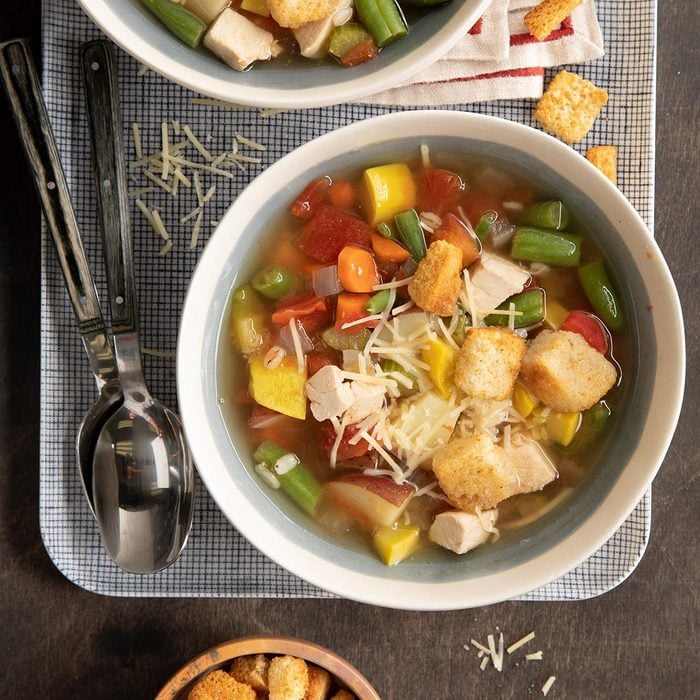
Classic Stone Soup
A hearty, rustic soup traditionally made in a large stone pot, often shared among friends. This version uses simple ingredients to create a comforting and flavorful meal.
🥘Ingredients
- 2 cups all-purpose flour
- 1 tsp salt
- 1/2 cup cold water
- 1 tbsp olive oil
- 8 cups vegetable or chicken broth
- 1 large onion, diced
- 4 cloves garlic, minced
- 2 carrots, sliced
- 2 celery stalks, sliced
- 1 cup diced potatoes
- 1 cup diced mushrooms
- 1 can (14.5 oz) diced tomatoes
- 1 bay leaf
- 1 tsp dried thyme
- 1 tsp dried rosemary
- Fresh parsley, chopped
- Crumbled feta cheese
- Crispy fried shallots
- Toasted bread cubes
👨🍳Directions
-
1
Preheat oven to 375°F (190°C). In a bowl, mix flour, salt, cold water, and olive oil to form a dough. Knead lightly and roll out to about 1/4-inch thickness. -
2
Cut the dough into 1-inch squares. Place them on a baking sheet and bake for 10-12 minutes until golden brown. -
3
In a large pot, combine broth, onion, garlic, carrots, celery, potatoes, mushrooms, diced tomatoes, bay leaf, thyme, and rosemary. Bring to a boil, then reduce heat and simmer for 25 minutes. -
4
Remove bay leaf. Arrange the baked dough squares in a circular pattern on the soup surface. Cover and simmer for another 10 minutes. -
5
Remove dough squares and place them on a plate. Ladle soup into bowls, top with parsley, feta cheese, crispy shallots, and toasted bread cubes. Serve hot.
🔧Equipment
- Large pot or Dutch oven
- Mixing bowls
- Cutting board
- Knife
- Wooden spoon
- Measuring cups and spoons
📊Nutrition Facts (per serving)
📝Notes
Tips
- For extra flavor, add a splash of red wine while simmering the broth.
- Substitute mushrooms with zucchini or bell peppers if preferred.
- Let the soup sit for 10 minutes before serving to allow flavors to meld.
Adaptations
- Use gluten-free flour for a vegan-friendly version.
- Add a pinch of smoked paprika for a deeper flavor.
Watch Video Of How Classic Stone Soup Works
❓ Frequently Asked Questions About Stone Soup
1. What is the origin of the Stone Soup story, and why is it often told as a children’s tale?
The Stone Soup story originated from medieval European folklore, likely inspired by real traditions where communities gathered around a communal pot to share food. It became a children’s tale because it teaches themes of unity, generosity, and cooperation—key lessons for young minds. The simple, humorous premise (where strangers contribute ingredients to a mysterious soup) makes it easy to adapt into interactive storytelling, encouraging kids to imagine and collaborate.
2. Can I make Stone Soup without using a stone or a heavy pot, and what alternatives work best?
Yes! While the classic tale uses a stone to heat the broth, you can use any heavy-bottomed pot or even a Dutch oven. For a more modern twist, try a cast-iron skillet or a heavy stainless steel pot—they distribute heat evenly and mimic the stone’s effect. If you’re using a stovetop, ensure your pot is large enough to hold the soup without overheating.
3. How do I ensure the soup is flavorful without relying on a single “secret ingredient”?
The magic of Stone Soup lies in layering simple, complementary flavors. Start with:
– Base: Vegetable broth (chicken, beef, or mushroom for depth).
– Umami boost: A splash of soy sauce, miso paste, or a pinch of fish sauce.
– Aromatics: Onions, garlic, carrots, and celery (soaked in cold water for 30 mins to soften).
– Herbs: Thyme, bay leaves, or parsley (added at the end).
– Texture: Toasted breadcrumbs, nuts, or crispy fried shallots for crunch.
The trick is to let each ingredient shine while keeping the broth light and adaptable—just like the story’s collaborative spirit!
4. What’s the best way to involve kids in the “contribution” process for storytelling?
Turn it into a game! Have each child (or group) pick an ingredient from a bowl of labeled items (e.g., “Add a carrot!” or “Bring a dash of salt!”). For extra fun:
– Use colorful bowls with pictures of ingredients (e.g., a 🥕 for onion, a 🧂 for salt).
– Have them act out their contribution (e.g., “I’m a wise old chef!” while stirring).
– Let them taste-test a small portion of the soup as it’s made to guess which ingredient they added.
The key is to make it playful and interactive—kids will love feeling like true collaborators!
5. Can Stone Soup be made vegetarian or vegan, and how do I adjust the recipe for plant-based ingredients?
Absolutely! Swap animal-based elements for plant-powered versions:
– Broth: Use mushroom, lentil, or vegetable broth (or make your own with veggies, spices, and water).
– Protein: Replace meat with toasted nuts (walnuts, almonds), seeds (pumpkin, sesame), or chickpeas for heartiness.
– Flavor deepeners: Try nutritional yeast (for cheesy notes), smoked paprika, or vegan miso paste.
– Crusty base: Use toasted baguette slices, pita, or crackers instead of breadcrumbs.
For a vegan “stone”, place a heavy cast-iron skillet on the stove (it’ll mimic the stone’s heat distribution). The result is a rich, comforting soup that’s just as satisfying as the original!

