
vegetable beef soup crockpot recipe


The Best vegetable beef soup crockpot recipe
I started making this vegetable beef soup in the crockpot years ago because I needed something I could start before work and forget about until dinner. It takes about 15 minutes to get everything into the pot, and then it cooks low and slow for most of the day. The beef comes out tender enough to break apart with a spoon, and the vegetables soak up all that flavor without turning to mush.
My kids eat this without complaints, which is more than I can say for most soups I put on the table. My youngest picks around the green beans, but he finishes the broth and asks for bread to dip in it. My husband takes leftovers to work the next day and says it tastes even better reheated. I usually make a big batch on Sunday and we eat on it for a couple of days, and I freeze whatever is left in single portions for busy weeknights.
There is also something satisfying about a bowl of this on a cold day when everyone is running in different directions. It is full of vegetables like carrots, celery, potatoes, and tomatoes, and the beef adds plenty of protein to keep everyone full until morning. It works for a normal Tuesday dinner just as well as it does for a crowd on a weekend, and I have brought it to potlucks more than once. If you want a soup that does not need babysitting and still tastes like you spent hours on it, this is the one I reach for.
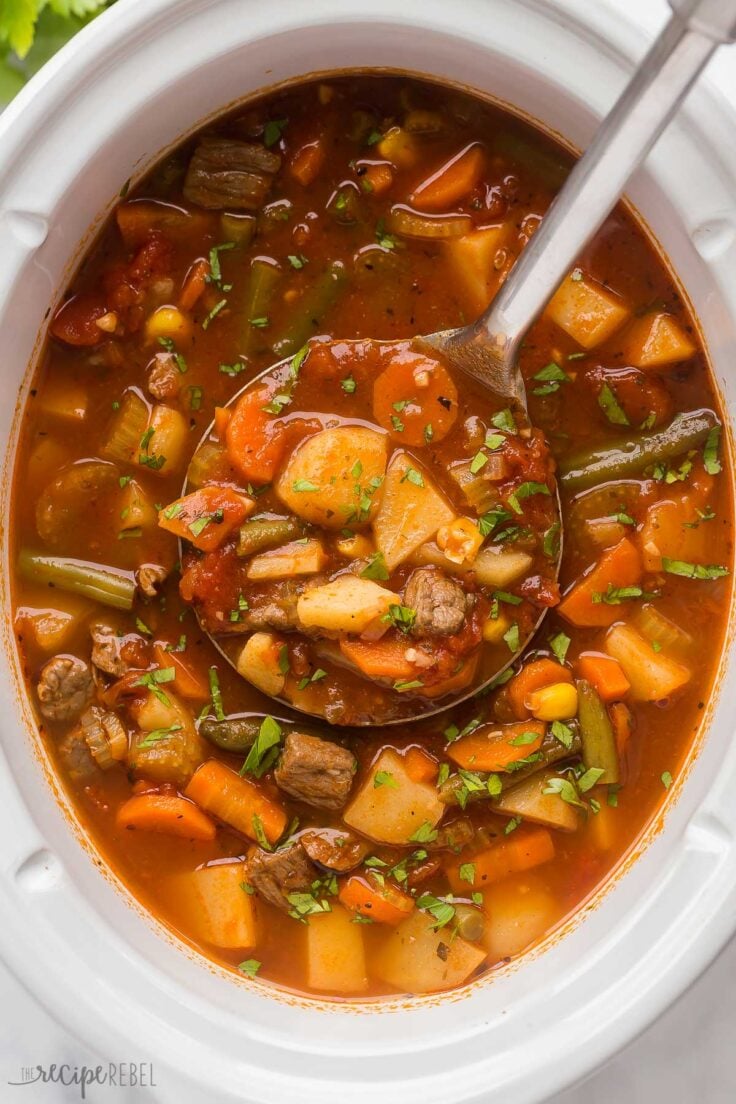
Crockpot Vegetable Beef Soup
Chunks of tender beef chuck and a garden’s worth of vegetables simmer all day in a savory tomato-beef broth. The slow cooker does the work, so you get a hearty, comforting bowl with almost no hands-on time.
🥘Ingredients
For the Soup
For Thickening (Optional)
👨🍳Directions
🔧Equipment
📊Nutrition Facts (per serving)
📝Notes
Watch Video Of How Crockpot Vegetable Beef Soup Works
This crockpot vegetable beef soup is the recipe I keep coming back to because it feeds a crowd without much work and everyone at the table finds something to like in it. I make it for weeknights, potlucks, and holidays when family fills the house, and it holds up well in the slow cooker for hours while I handle everything else. If you need one dependable meal that stretches far and pleases a mixed group of eaters, this is the one I reach for.
❓ Frequently Asked Questions About Crockpot Vegetable Beef Soup
1. What cut of beef works best in a slow cooker vegetable soup?
Choose a cut with plenty of connective tissue, like chuck roast, stew meat cut from chuck, or bottom round. These cuts turn tender and flavorful during the long, moist cook, while leaner cuts such as sirloin or tenderloin dry out and turn stringy. Trim excess fat and cut the meat into 1-inch cubes so it cooks evenly.
2. Can I add frozen vegetables instead of fresh?
Yes, but timing matters. Stir frozen corn, peas, green beans, or mixed vegetables in during the last 30 to 45 minutes of cooking so they keep their color and texture. Adding them at the start makes them mushy. Firmer fresh vegetables like carrots, potatoes, and celery should still go in at the beginning.
3. Why did my soup turn out watery?
Most often it comes from too much broth or vegetables releasing liquid as they cook. Start with less broth than you think you need, since the slow cooker traps steam, and add more at the end if the soup is too thick. You can also stir in a tablespoon of tomato paste or mash a few pieces of potato against the side of the pot to thicken the broth naturally.
4. How long should vegetable beef soup cook in the crockpot?
Plan on 6 to 8 hours on low or 4 to 5 hours on high for a soup made with raw cubed beef and root vegetables. The soup is ready when the beef shreds easily with a fork and the carrots and potatoes are fork-tender. If your slow cooker runs hot, check it at the early end of the range.
5. Can I freeze the leftovers?
Yes, this soup freezes well. Cool it completely, then ladle it into freezer-safe containers, leaving an inch of headspace, and freeze for up to three months. Potatoes can soften and turn grainy after freezing, so if you plan to freeze a batch, consider slightly undercooking them or adding fresh cubed potatoes when you reheat. Thaw overnight in the refrigerator and warm gently on the stove or in the microwave.

