
walnut pesto recipe

The Best walnut pesto recipe
I love this pesto because it’s so versatile—great for everyday meals or when you want to impress someone at a dinner party. It’s lighter than the classic garlic-heavy pesto but still rich and satisfying, with the perfect balance of earthy walnuts and bright herbs. My husband always says it’s the kind of dish that makes him forget he’s eating healthy, but it actually is—walnuts are loaded with heart-healthy fats, and the basil is packed with vitamins that keep things fresh. Plus, it’s quick to make, so there’s no excuse not to use it. Whether you’re whipping up a quick lunch or prepping for a big family gathering, this pesto is always a crowd-pleaser.
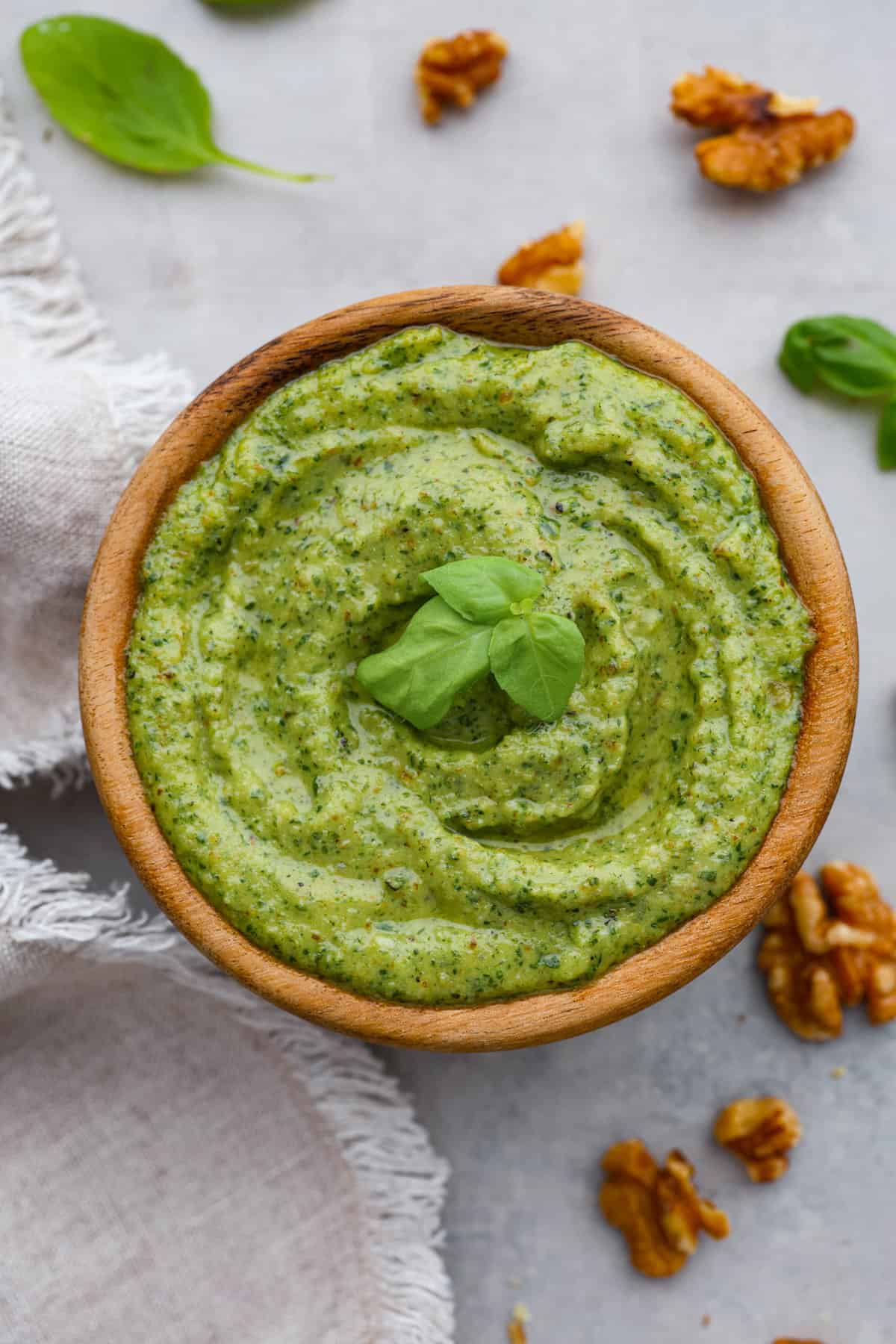
Walnuts and Basil Pesto
A rich, nutty pesto made with walnuts, fresh basil, garlic, and Parmesan cheese, perfect for pasta, sandwiches, or drizzling over vegetables. This recipe is a must-try for any occasion.
🥘Ingredients
- 1 cup walnuts, toasted
- 2 cups fresh basil leaves
- 2 cloves garlic
- ½ cup grated Parmesan cheese
- ¼ cup extra-virgin olive oil
- 2 tbsp lemon juice
- Salt and pepper to taste
👨🍳Directions
-
1
Toast the walnuts in a dry pan over medium heat for 3–5 minutes until fragrant. Let cool. -
2
In a food processor, combine toasted walnuts, basil leaves, garlic, Parmesan, olive oil, lemon juice, salt, and pepper. Pulse until smooth. -
3
Transfer to a bowl, cover, and refrigerate for at least 30 minutes to let flavors meld.
🔧Equipment
- Food processor or blender
- Medium mixing bowl
- Fine-mesh sieve (optional, for straining basil)
📊Nutrition Facts (per serving)
📝Notes
Tips
- For extra creaminess, add 1 tbsp pine nuts or sunflower seeds.
- Use in place of traditional basil pesto in pasta, as a dip, or over grilled chicken.
- Store in an airtight container in the fridge for up to 5 days or freeze for up to 3 months.
Watch Video Of How Walnuts and Basil Pesto Works
❓ Frequently Asked Questions About Walnuts and Basil Pesto
1. What is the best way to store walnut pesto to keep it fresh?
To store walnut pesto, transfer it to an airtight container and refrigerate within 2 hours of making it. It will keep fresh for about 5–7 days. For longer storage, freeze it in portions (about 1 cup) in an ice cube tray or small container. Once frozen, transfer to a bag or container and store for up to 3 months. Thaw in the fridge overnight before using.
—
2. Can I substitute walnuts for another type of nut in pesto?
Yes! Common substitutes include pine nuts, almonds, cashews, or pecans. Pine nuts add a sweeter, more delicate flavor, while almonds and cashews work well for a slightly milder taste. Pecans add a rich, buttery depth. Just adjust the ratio—pine nuts often require less since they’re pricier, while cashews may need extra oil to emulsify properly.
—
3. Why is my walnut pesto too thick or too thin?
A thick pesto can happen if you use too much walnut or not enough liquid. To fix it, gradually add 1–2 tablespoons of olive oil or water while blending until smooth. If it’s too thin, reduce the liquid slightly next time and ensure you’re blending thoroughly. For extra creaminess, add a splash of milk or yogurt (if making a dairy-based pesto).
—
4. How do I make walnut pesto without a food processor or blender?
If you don’t have a blender, you can hand-chop the walnuts until fine, then mix them with the basil, garlic, and grated cheese in a bowl. Add the olive oil and Parmesan gradually while stirring vigorously with a fork or spoon. For best results, use a mortar and pestle for a more traditional texture.
—
5. Can walnut pesto be used in non-pasta dishes?
Absolutely! Walnut pesto is incredibly versatile. Try it on grilled meats (like chicken or steak), as a dressing for salads, in egg dishes (like frittatas or scrambled eggs), or as a sauce for roasted vegetables. It also works well in soups, dips, or even as a marinade for fish. For a creamy twist, mix it into mac and cheese or baked potatoes.

