
air fry fish and chips recipe


The Best air fry fish and chips recipe
I started making fish and chips in the air fryer on Friday nights because standing over a pot of hot oil with two kids running through the kitchen was not working for me. The air fryer gives me that crispy coating without the mess, and I can get dinner on the table in about 30 minutes. Cleanup takes one basket and a few plates instead of a splattered stove and a pot of used oil I have to figure out how to throw away.
My family asks for this one constantly. My husband likes the fish with malt vinegar, my oldest drowns everything in tartar sauce, and my youngest picks the crispy edges off the fries before I even sit down. I usually do the fries first, since they take longer, then the fish, so both land on the table warm at the same time. It works just as well for a busy Tuesday as it does for a relaxed weekend dinner.
The main reason I keep coming back to this method is the oil. Deep frying means submerging everything in cups of oil, and the air fryer uses a light coating instead, so the fish still gets golden and crisp without all that grease. I serve it with a simple slaw or steamed green beans to round out the plate. It feels like takeout without the price tag, and I know exactly what went into it.
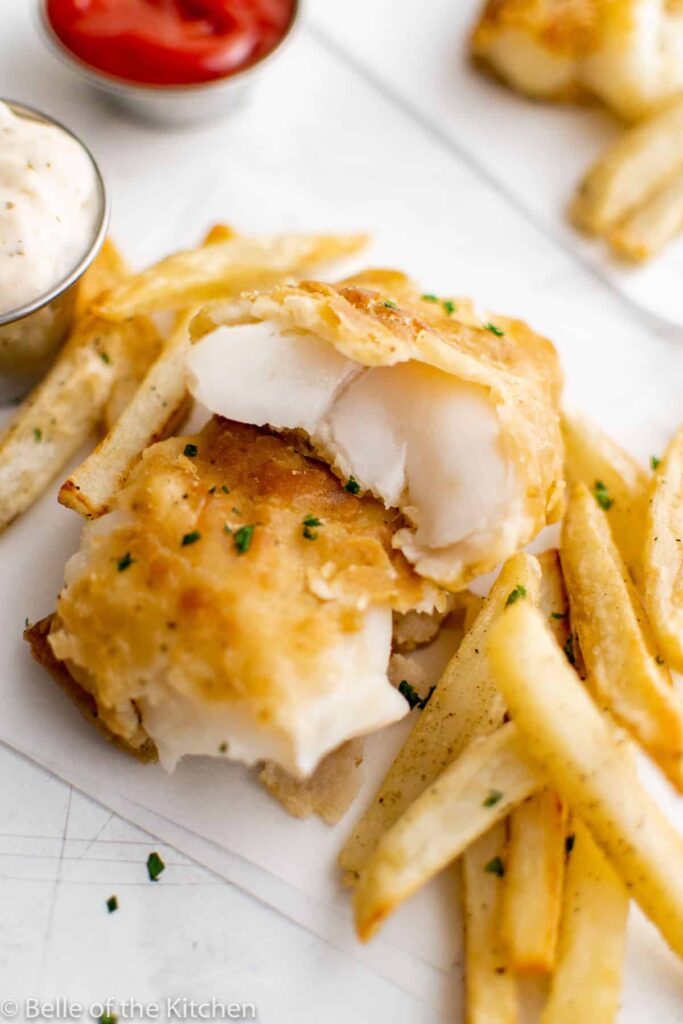
Air Fryer Fish and Chips
Crisp, golden cod fillets with a panko coating, cooked in the air fryer alongside hand-cut potato chips. The basket does the work of a deep fryer with far less oil and no splatter, and the whole plate comes together in about 40 minutes.
🥘Ingredients
For the Fish
For the Chips
For the Tartar Sauce
For Serving
👨🍳Directions
🔧Equipment
📊Nutrition Facts (per serving)
📝Notes
Watch Video Of How Air Fryer Fish and Chips Works
I make this air fryer fish and chips on busy weeknights and for family gatherings because it feeds a crowd without leaving me stuck at the stove. The air fryer keeps the fish crisp and the fries golden with a lot less oil and mess than deep frying. It is a meal that works for any occasion and picky eaters always clean their plates.
❓ Frequently Asked Questions About Air Fryer Fish and Chips
1. What kind of fish works best for air fryer fish and chips?
Firm, thick white fish holds up best because it stays moist while the coating crisps. Cod, haddock, pollock, and halibut are all reliable choices. Look for fillets about 1 inch thick so the outside browns at the same rate the inside cooks through. Skip delicate fish like sole or tilapia, which tend to fall apart before the crust sets.
2. Why did my breading slide off in the air fryer?
The usual culprit is a wet fillet going straight into the crumbs. Pat the fish completely dry with paper towels, then run it through flour, then beaten egg, then crumbs, pressing gently so the coating sticks. Let the breaded fillets rest on a plate for 5 to 10 minutes before cooking. A light spritz of oil over the top helps the crust seal and brown evenly.
3. Can I cook the fish and the chips at the same time?
Not in the same basket at the same time, since they need different temperatures and timings. Start the potatoes first because they take longer, then remove them and keep them warm in a low oven while the fish cooks. Some air fryers have a divider or a second rack that lets you run both, but check that air can still circulate freely or the food will steam instead of crisp.
4. How do I stop the fish from drying out?
Keep the fillets thick and don’t overcook them. Most cod or haddock fillets at 1 inch thick are done in 10 to 12 minutes at 400°F, and they should flake easily with a fork when pressed near the center. If your fillets are thinner, drop the time by a couple of minutes and check early. Letting the fish rest for 2 minutes off the heat helps it stay juicy.
5. Can I reheat leftovers without ruining the coating?
Yes, and the air fryer is the best tool for the job. Reheat at 350°F for 3 to 4 minutes, which brings back most of the crunch that a microwave destroys. Watch it closely, since already-cooked fish dries out fast on a second pass. Leftovers keep in the refrigerator for up to two days.
6. Do I need to use oil at all?
You need very little, but a thin coat matters. A light spray over the breading encourages browning and helps the crumbs adhere. Without any oil, the coating tends to stay pale and can taste dry, especially with a panko crust. One or two quick sprays per side is plenty.

