
cream cheese danish recipe

The Best cream cheese danish recipe
I love this recipe because it’s foolproof—no fancy skills required, just good ingredients and a little patience. The cream cheese is what makes them shine, and I swear by using the good stuff, like Philadelphia cream cheese, because it holds its shape and doesn’t get too runny when baked. My family loves them because they’re portable, they’re filling, and they don’t require a lot of cleanup. My kids will eat a whole one in one sitting, and honestly, I don’t mind. They’re light enough that they don’t weigh you down, but they’re also satisfying enough that you don’t feel like you’re missing out on a real meal. And let’s be honest, there’s nothing better than a good danish when you’re hosting a little gathering—just grab a few and serve them with coffee or tea, and suddenly you’ve got a showstopper breakfast or brunch. Plus, they’re actually pretty healthy, if you think about it. The whole grain dough gives you a little fiber, and the cream cheese is packed with protein and calcium, so it’s not like you’re eating nothing but sugar and fat. It’s a little treat that’s actually good for you, and that’s something I appreciate.
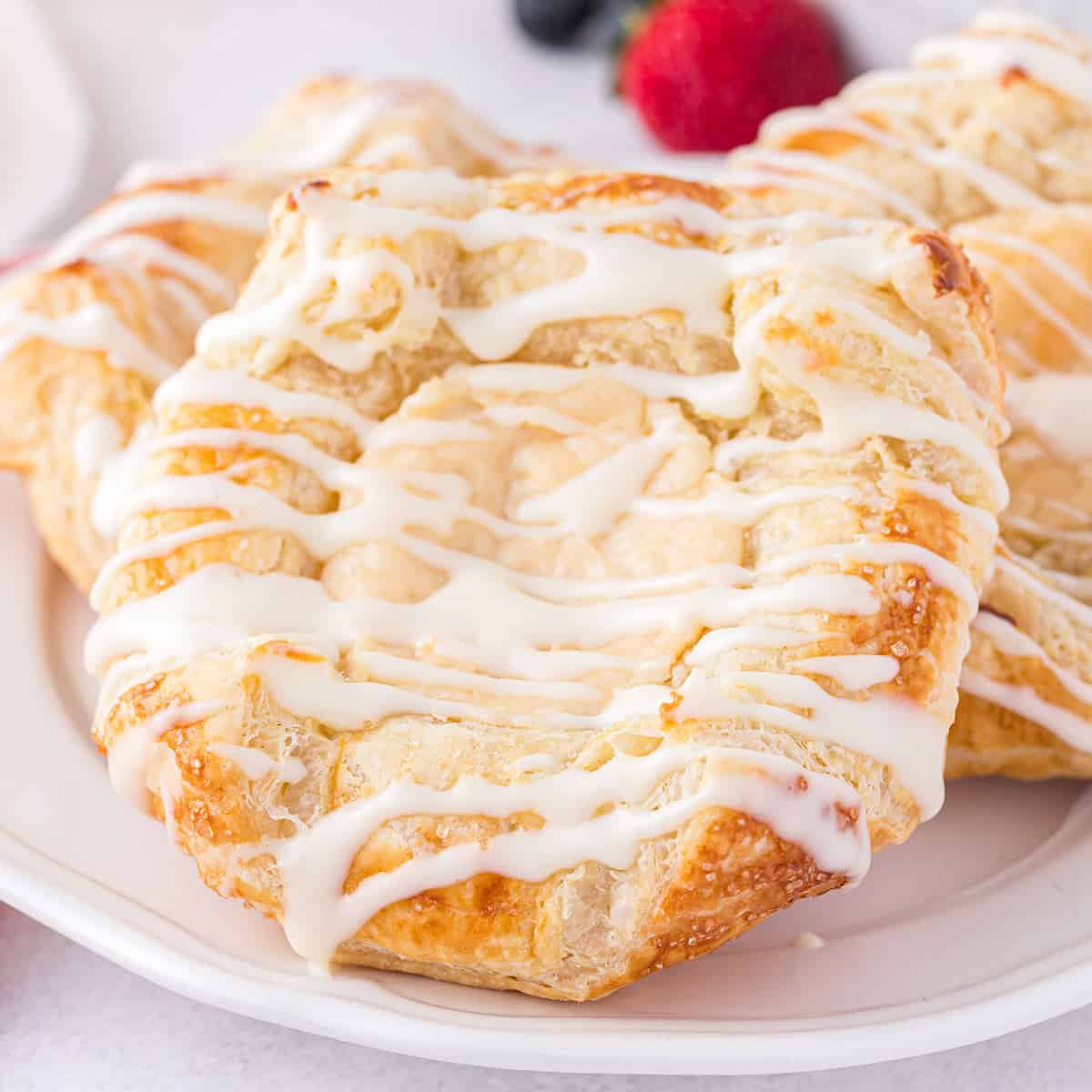
Cream Cheese Danish Recipe
A delightful pastry filled with a rich cream cheese glaze, perfect for breakfast or brunch. Light, flaky, and indulgent!
🥘Ingredients
- 2 ½ cups all-purpose flour
- 1 tsp salt
- 1 tsp sugar
- 1 packet (2 ¼ tsp) active dry yeast
- 1 cup warm milk (about 110°F)
- 2 tbsp unsalted butter, softened
- 8 oz cream cheese, softened
- ½ cup powdered sugar
- 1 tsp vanilla extract
- 1 cup heavy whipping cream
- 1 tbsp lemon juice
- 1 sheet puff pastry, thawed
- 1 egg (for egg wash)
- Extra powdered sugar (for dusting)
👨🍳Directions
-
1
Activate the yeast by dissolving it in warm milk with a pinch of sugar. Let sit for 5 minutes until foamy. -
2
In a large bowl, mix flour and salt. Add the yeast mixture and softened butter. Stir until combined. -
3
Gradually add the yeast mixture to the dry ingredients, mixing until a shaggy dough forms. Knead for 5 minutes until smooth. -
4
Place dough in a lightly oiled bowl, cover, and let rise in a warm place for 1 hour or until doubled in size. -
5
Preheat oven to 375°F (190°C). Roll out the risen dough on a lightly floured surface to about 12×18 inches. -
6
Cut the dough into 8 equal rectangles. Place each rectangle on a baking sheet lined with parchment paper. -
7
Mix cream cheese, powdered sugar, vanilla, heavy cream, and lemon juice until smooth. Spread evenly over each dough rectangle. -
8
Fold the dough over the filling, creating a half-moon shape. Brush with beaten egg for shine. -
9
Bake for 25-30 minutes or until golden brown. Dust with powdered sugar while warm.
🔧Equipment
- Mixing bowls
- Stand mixer or hand mixer
- Rolling pin
- Pastry brush
- Oven
- Cutting board
- Knife
📊Nutrition Facts (per serving)
📝Notes
- For a lighter option, reduce butter to 1 tbsp and use half the sugar in the dough.
- Ensure yeast is active by checking for foaming before proceeding.
- Store leftovers in an airtight container at room temperature for up to 2 days.
Watch Video Of How Cream Cheese Danish Recipe Works
❓ Frequently Asked Questions About Cream Cheese Danish
What is the best way to store leftover cream cheese Danishes?
Leftover cream cheese Danishes can be stored in the refrigerator for up to 3 days. To keep them fresh, place them in an airtight container lined with parchment paper between layers to prevent sticking. If you plan to reheat them, you can do so by placing them in a preheated oven at 350°F (175°C) for about 5–10 minutes until warmed through.
Can I substitute regular cream cheese for Philadelphia cream cheese in this recipe?
While regular cream cheese can work in a pinch, Philadelphia cream cheese is preferred because it has a smoother texture and higher fat content, which gives the Danishes a richer, creamier filling. If using regular cream cheese, ensure it’s full-fat and well-chilled before mixing to avoid a watery or thin filling. For best results, stick to Philadelphia if possible.
How do I prevent the Danish dough from becoming too sticky while kneading?
To avoid sticky dough, ensure your hands and surfaces are clean and dry. If the dough feels too wet, gently knead in small amounts of ice-cold water (about 1–2 tablespoons at a time) while kneading. Overworking the dough can also make it sticky, so knead just until it’s smooth and elastic. If needed, chill the dough for 10–15 minutes before continuing if it’s still too tacky.
Why do my Danishes not puff up properly when baking?
Several factors can prevent proper puffing in Danish dough. First, ensure your oven is preheated to the correct temperature (375°F/190°C) and that the oven is hot enough. If the dough is too cold or overworked, it won’t rise well. Also, check that your yeast is fresh—old yeast may not activate properly. For best results, let the dough rise in a warm, draft-free place for about 1–2 hours until it nearly doubles in size. Overproofing can also cause collapse, so monitor the dough closely.
What can I add to the cream cheese filling to enhance flavor?
The cream cheese filling is already delicious, but you can enhance its flavor with small additions like:
– Vanilla extract (½ teaspoon for a subtle sweetness)
– Cinnamon or cardamom (½ teaspoon for warmth)
– Brown sugar or honey (1–2 tablespoons for a sweeter touch)
– A pinch of salt (to balance sweetness)
– Fresh berries or jam (for a fruity twist)
– Chocolate chips or chopped nuts (for extra texture and richness)
Always mix these gently into the chilled cream cheese before spreading to avoid deflating the dough.

