
filipino pork ribs recipe

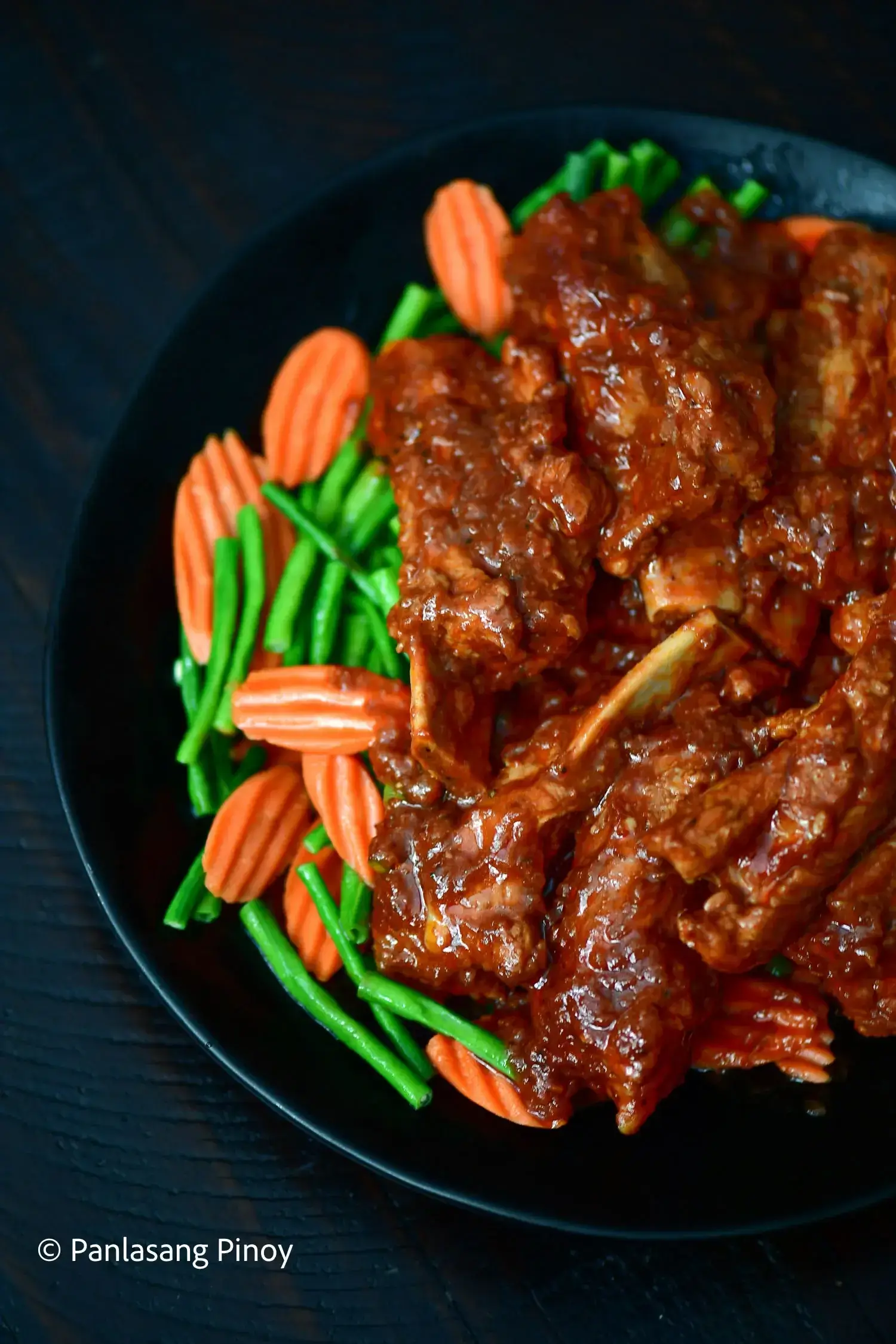
- The Best filipino pork ribs recipe
- Filipino-Style Sweet and Sour Pork Ribs (Spareribs)
- 🥘Ingredients
- 👨🍳Directions
- 🔧Equipment
- 📊Nutrition Facts (per serving)
- 📝Notes
- Watch Video Of How Filipino-Style Sweet and Sour Pork Ribs (Spareribs) Works
- ❓ Frequently Asked Questions About Filipino-Style Sweet and Sour Pork Ribs (Spareribs)
The Best filipino pork ribs recipe
What I really appreciate about this recipe is how balanced it is. The ribs are slow-cooked until they’re fall-off-the-bone tender, and the marinade does most of the work for you. Plus, the ingredients are straightforward—soy sauce, vinegar, garlic, brown sugar, and a few spices—and they’re all things I usually have in my pantry. It’s also a great way to get some protein and iron into my family’s diet without feeling like we’re eating something overly heavy. The vinegar helps tenderize the meat, and the garlic and ginger add anti-inflammatory benefits, which is always a bonus. If you’re looking for a dish that’s comforting, flavorful, and just a little different from the usual barbecue ribs, this one’s a winner.
Filipino-Style Sweet and Sour Pork Ribs (Spareribs)
A classic Filipino dish featuring tender pork ribs glazed in a tangy, sweet, and slightly savory sauce. This dish is perfect for family gatherings and pairs well with steamed rice.
🥘Ingredients
- 2 lbs pork spareribs, cut into individual ribs
- 1 tsp salt
- 1 tsp ground black pepper
- 1 tsp garlic powder
- 1 tbsp soy sauce
- 1 tbsp calamansi juice or lemon juice (optional)
- 1/2 cup pineapple juice
- 1/4 cup brown sugar
- 1/4 cup ketchup
- 3 tbsp soy sauce
- 3 tbsp vinegar (white or cane)
- 1 tbsp oyster sauce
- 1 tsp minced garlic
- 1 tsp minced ginger
- 1/2 tsp red chili flakes (optional)
- 1 tbsp cornstarch mixed with 2 tbsp water (slurry)
- 1/2 cup pineapple chunks
- 1 bell pepper, sliced into strips
- 1 small onion, sliced into wedges
- 2 tbsp chopped green onions
👨🍳Directions
-
1
In a large pot, add the pork ribs and enough water to cover them. Bring to a boil over medium-high heat. -
2
Once boiling, reduce heat to low and simmer for 30-40 minutes, skimming off any foam that rises to the surface. Drain the ribs and set aside. -
3
In a mixing bowl, season the boiled ribs with salt, black pepper, garlic powder, soy sauce, and calamansi or lemon juice. Toss to coat evenly and let marinate for 10 minutes. -
4
Heat a skillet or wok over medium-high heat and add a small amount of oil. Pan-fry the ribs in batches until lightly browned on all sides, about 3-4 minutes per side. Remove and set aside. -
5
In the same skillet, sauté the garlic and ginger until fragrant, about 30 seconds. Add the onion and bell pepper, cooking for 2 minutes until slightly softened. -
6
Pour in the pineapple juice, brown sugar, ketchup, soy sauce, vinegar, oyster sauce, and chili flakes (if using). Stir well and bring to a simmer. -
7
Return the ribs to the skillet and coat them in the sauce. Simmer for 10-15 minutes, stirring occasionally, until the sauce thickens slightly. -
8
Stir in the cornstarch slurry and cook for an additional 2-3 minutes until the sauce thickens to a glossy consistency. Add pineapple chunks and stir to combine. -
9
Garnish with chopped green onions and serve hot with steamed rice.
🔧Equipment
- Large pot or deep pan
- Mixing bowl
- Tongs
- Skillet or wok
- Measuring cups and spoons
- Knife and cutting board
📊Nutrition Facts (per serving)
📝Notes
Watch Video Of How Filipino-Style Sweet and Sour Pork Ribs (Spareribs) Works
❓ Frequently Asked Questions About Filipino-Style Sweet and Sour Pork Ribs (Spareribs)
1. What cut of pork ribs is best for Filipino-style pork ribs?
The most common cuts used in Filipino pork ribs recipes are baby back ribs (tender and lean) or St. Louis-style ribs (meatier and slightly fattier). Baby back ribs cook faster and are ideal for grilling or baking, while St. Louis ribs hold up better for slow-cooking methods like adobo or sinigang. For maximum flavor, choose ribs with a good balance of meat and fat.
2. How do I make Filipino pork ribs tender and not tough?
To ensure tender ribs, follow these key steps:
– Marinate overnight (especially for adobo or lechon kawali styles) to break down the fibers.
– Slow-cook at low heat (e.g., simmering in sauce for 1.5–2 hours or baking at 300°F/150°C for 2–3 hours).
– Wrap in foil during cooking (like the “Texas crutch” method) to trap moisture.
– Rest the ribs for 10–15 minutes after cooking to redistribute juices.
– Avoid boiling vigorously—gentle simmering is better for texture.
3. What’s the difference between Filipino adobo ribs and sinigang ribs?
Both are iconic Filipino dishes but differ in flavor and preparation:
– Adobo ribs: Braised in a tangy-savory sauce of soy sauce, vinegar, garlic, bay leaves, and peppercorns. The ribs absorb the rich, umami-packed sauce, often finished with a caramelized glaze.
– Sinigang ribs: Simmered in a sour tamarind-based broth with vegetables (like radish, eggplant, and kangkong). The focus is on the light, tangy soup rather than a thick sauce. Other souring agents like calamansi, green mango, or guava can be used.
4. Can I grill Filipino-style pork ribs instead of baking or braising?
Yes! Grilling works well for Filipino ribs, especially if you want a smoky char. Here’s how:
– Pre-cook the ribs (boil or bake for 1–1.5 hours) to tenderize them before grilling.
– Marinate in adobo or lechon sauce for 4+ hours (or overnight) for deeper flavor.
– Grill over indirect heat (medium-low, ~300°F/150°C) for 30–45 minutes, basting with sauce frequently.
– Finish over direct heat to caramelize the glaze (watch for burning due to sugar in the sauce).
– For sinigang ribs, grill first, then simmer in the broth to infuse smokiness.
5. What are the best side dishes to serve with Filipino pork ribs?
Filipino pork ribs pair perfectly with these classic sides:
– Steamed white rice (essential to soak up sauces like adobo or sinigang broth).
– Atchara (pickled green papaya) to cut through the richness.
– Ginataang gulay (vegetables in coconut milk) for a creamy contrast.
– Ensaladang talong (grilled eggplant salad) or pinakbet (vegetable stew) for freshness.
– Lumpia (Filipino spring rolls) or pancit (noodles) for a heartier meal.
– Sawsawan (dipping sauces) like toyomansi (soy sauce + calamansi) or spicy vinegar for extra zing.

