
jimmy dean sausage balls recipe


The Best jimmy dean sausage balls recipe
I started making sausage balls years ago for holiday mornings, and they turned into the one appetizer my family asks for by name. The recipe calls for Jimmy Dean sausage, baking mix, and shredded cheddar, so the ingredient list is short and I usually have everything in the pantry already. Mixing takes about five minutes and the oven handles the rest.
My kids eat them straight off the cooling rack before I can get them onto a plate. I double the batch for football games, birthday parties, and Christmas morning because they are easy to set out on a tray and they still taste good after sitting out for a while. They freeze well too, so I keep a bag in the freezer for nights when I need something fast.
There is real substance to them as well. The sausage and cheese bring protein, which makes them more filling than most party snacks, and I serve them with fruit or a simple salad when they are the main part of a meal instead of an appetizer. They work as breakfast, a game day snack, or a quick dinner on nights when I do not feel like cooking much.
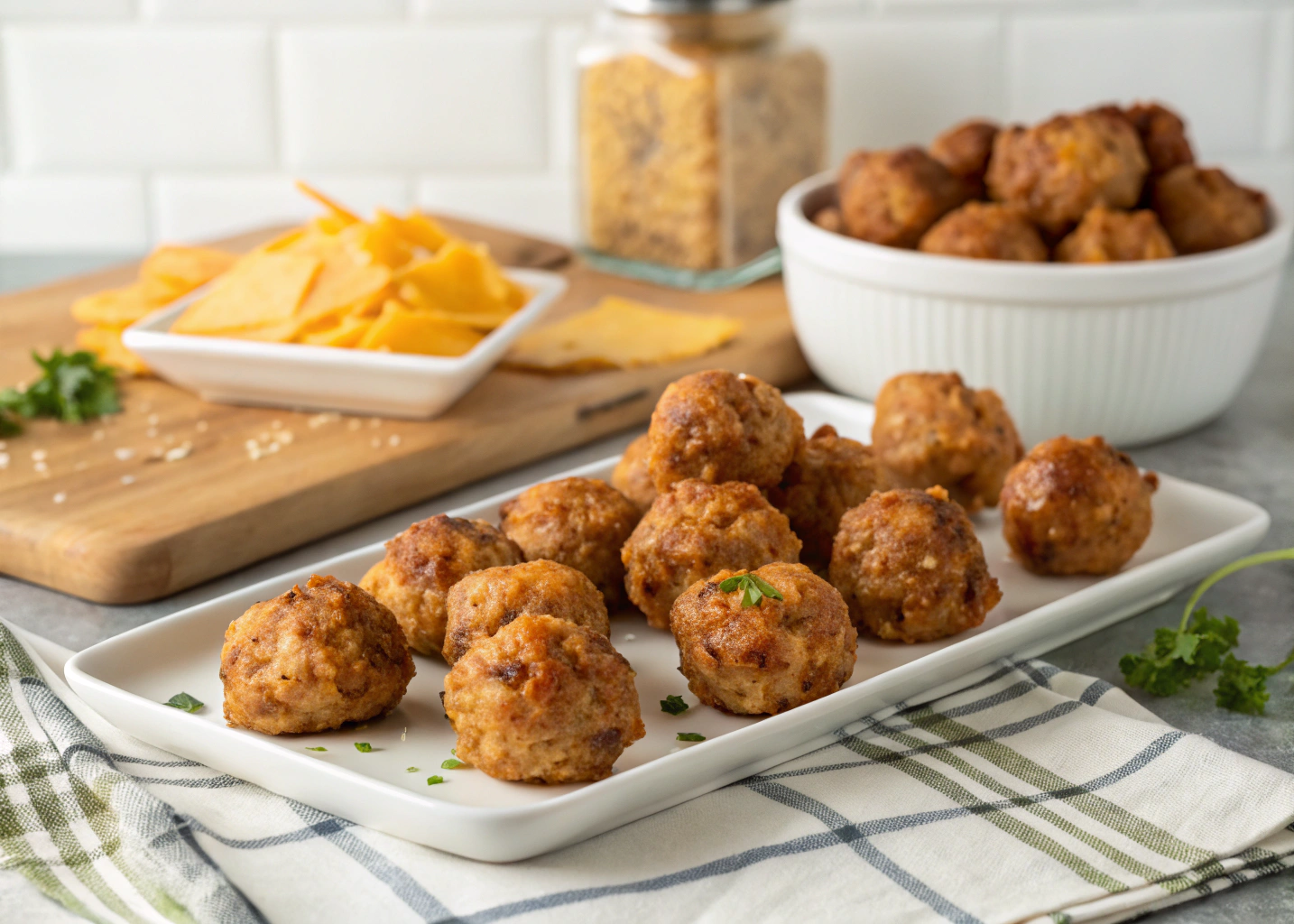
Jimmy Dean Sausage Balls
Savory, cheesy sausage balls made with Jimmy Dean pork sausage, baking mix, and sharp cheddar. They come together in one bowl, bake up golden on the outside, and stay tender and juicy inside.
🥘Ingredients
For the Sausage Balls
For Serving
👨🍳Directions
🔧Equipment
📊Nutrition Facts (per serving)
📝Notes
Watch Video Of How Jimmy Dean Sausage Balls Works
This sausage balls recipe is one I keep coming back to because it fits just about any occasion, from a lazy Sunday morning to a last minute party invite. They come together fast, they travel well, and there is always an empty tray by the end of a family gathering. If you need something simple that everyone actually eats, this is the one to make.
❓ Frequently Asked Questions About Jimmy Dean Sausage Balls
1. Why did my sausage balls turn out dry?
Dry sausage balls usually come from overbaking or from too little cheese and binding mix. Pull them from the oven as soon as the tops are lightly browned and the centers feel firm, and remember they continue to set as they cool. Using a fattier sausage and shredding your own cheddar instead of buying pre-shredded also helps, since pre-shredded cheese is coated with starch that absorbs moisture. If the mixture feels crumbly before baking, add a splash of milk a tablespoon at a time until it holds together when squeezed.
2. Can I make sausage balls ahead of time or freeze them?
Yes, both work well. You can shape the raw mixture into balls, arrange them on a parchment-lined sheet, and refrigerate for up to 24 hours before baking. To freeze, place the shaped balls on a tray until solid, then transfer them to a freezer bag for up to three months. Bake from frozen on a parchment-lined pan, adding roughly five minutes to the bake time. Baked sausage balls also freeze and reheat nicely in a 300°F oven until warmed through.
3. Can I use something other than Bisquick in this recipe?
Any all-purpose baking mix works as a one-to-one swap, and store brands behave the same as name brands. If you want to make your own, combine 2 cups of all-purpose flour, 1 tablespoon of baking powder, and 1/2 teaspoon of salt for the equivalent of about 2 cups of mix. Self-rising flour is not a good substitute on its own because the ratio of leavening differs.
4. How many sausage balls does one batch make?
A standard batch made with a 16-ounce package of Jimmy Dean sausage, 2 cups of baking mix, and about 4 cups of shredded cheddar yields roughly 40 to 50 bite-sized balls when rolled to about one inch. For a party, plan on three to four pieces per guest as an appetizer, and roll them smaller if you are serving them alongside other finger foods.
5. Should I cook or drain the sausage before mixing it in?
No. Use the sausage raw and straight from the package, breaking it up with your hands or a fork as you combine it with the baking mix and cheese. The fat renders during baking and keeps the balls moist. If you pre-cook the sausage, the mixture loses the bind it needs and the texture turns crumbly.

