
sourdough french toast recipe


The Best sourdough french toast recipe
This recipe is perfect for so many reasons. It’s great for special occasions, like a weekend brunch with friends or a cozy Sunday dinner, but it also works just as well for everyday meals. You can prep it ahead of time—just cover it and refrigerate, then toast it fresh in the morning—and it’ll still taste amazing. Plus, the health benefits are pretty solid. Sourdough has a lower glycemic index than regular bread, so it keeps blood sugar steady, and the fermentation process makes the nutrients easier to digest. It’s not some extreme health food, but it’s not just empty carbs either. And the eggs and milk add protein and healthy fats, so it’s filling without feeling like you’re eating a cake. My husband says it’s the only breakfast that doesn’t leave him feeling sluggish, and that’s saying something.
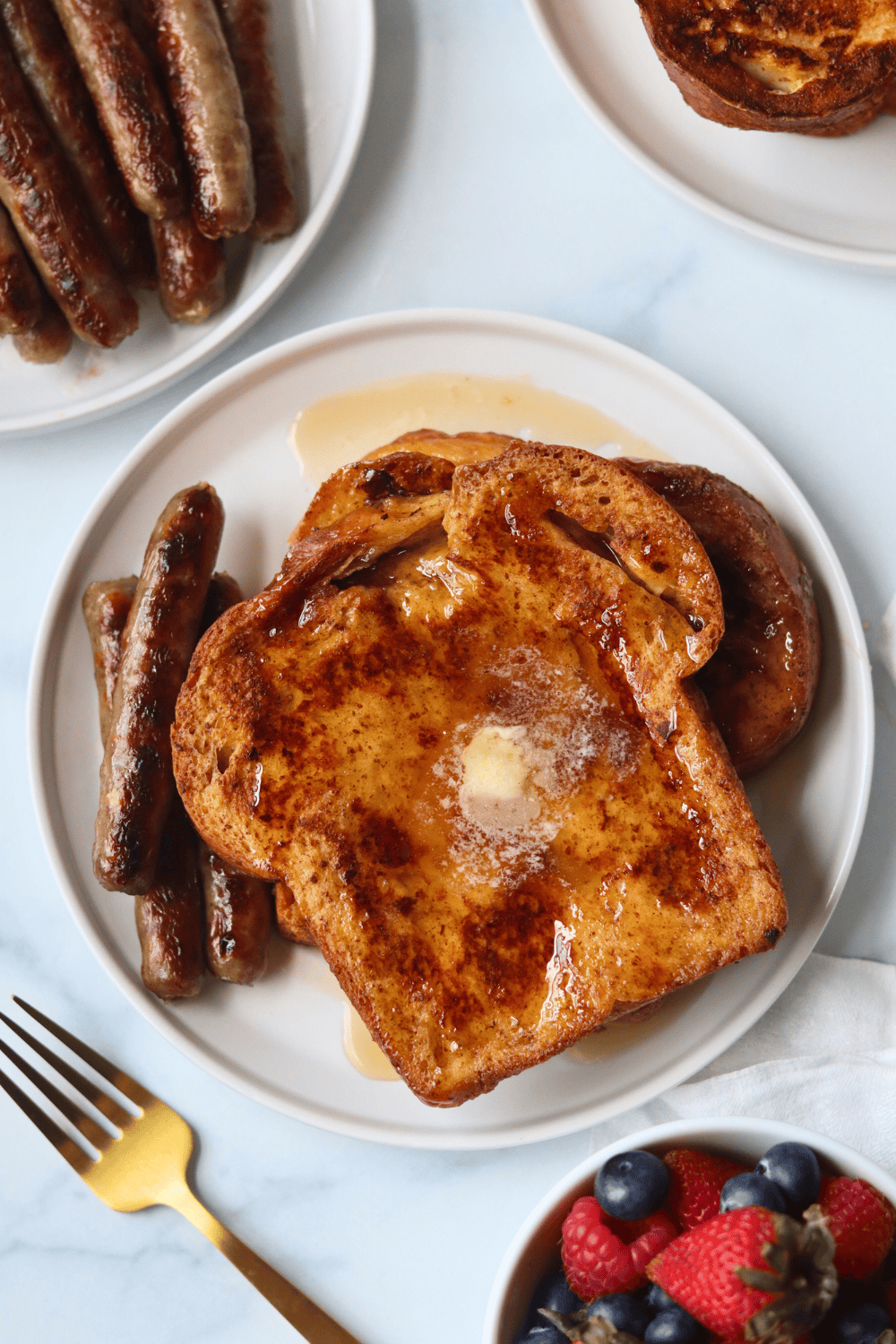
Classic Sourdough French Toast
A rich, fluffy French toast made with a tangy sourdough starter, perfect for breakfast or brunch. The dough is infused with cinnamon and vanilla for extra flavor.
🥘Ingredients
- 2 cups all-purpose flour
- 1 cup unsweetened almond milk (or milk of choice)
- 2 large eggs
- 1 tbsp honey or maple syrup
- 1 tsp cinnamon
- ½ tsp vanilla extract
- 1 cup active sourdough starter (100% hydration)
- 1 tsp salt
- 2 large eggs
- 1 tbsp milk
- 1 tbsp melted butter
- Optional toppings: fresh berries, powdered sugar, maple syrup
👨🍳Directions
-
1
Activate the sourdough starter: Mix the starter with ½ cup warm water and let sit at room temperature for 10 minutes until bubbly. -
2
Whisk flour, salt, cinnamon, and vanilla in a bowl. In another bowl, beat eggs, honey, and milk. Gradually mix wet and dry ingredients until smooth. Fold in the activated starter. -
3
Let the dough rest for 30 minutes at room temperature. Preheat oven to 375°F (190°C) if baking instead of frying. -
4
Heat a skillet over medium heat and lightly grease with butter. Dip bread slices (use sourdough or thick-cut bread) into the egg wash (whisked eggs, milk, and melted butter), then coat in the dough mixture. Place in the skillet. -
5
Cook for 3–4 minutes per side until golden brown. Transfer to a paper towel-lined plate and repeat with remaining slices. -
6
Serve warm with toppings like fresh berries, powdered sugar, or a drizzle of maple syrup.
🔧Equipment
- Mixing bowls
- Whisk or fork
- Large skillet (non-stick preferred)
- Oven (optional, for baking)
- Paper towels
- Cutting board
- Knife
📊Nutrition Facts (per serving)
📝Notes
- For extra crispiness, bake at 375°F (190°C) for 10–12 minutes instead of frying.
- Adjust sweetness by adding more honey or sugar to the dough.
- Use stale bread to prevent sogginess.
Watch Video Of How Classic Sourdough French Toast Works
❓ Frequently Asked Questions About Sourdough French Toast
What is the key difference between traditional sourdough discard and using fresh sourdough starter in French toast?
The key difference lies in texture and flavor. Traditional sourdough discard (unused portion of your starter) has a sharper, tangier taste and a denser, slightly chewier crumb due to its lower hydration and fermentation profile. Using fresh sourdough starter (typically at ~100% hydration) yields a lighter, airier texture with a more complex, nuanced tang—ideal for French toast. If using discard, it’s best to incorporate it into the batter with extra eggs and milk to balance its intensity.
—
Why does my sourdough French toast turn out gummy or dense, and how can I fix it?
A gummy or dense result often happens due to overproofing the starter, insufficient baking, or incorrect batter ratios. To fix it:
– Check your starter’s readiness: It should be bubbly and doubled in size after 4–8 hours at room temp (not overly bubbly or slimy). If it’s too active, let it rest for 1–2 hours before using.
– Reduce fermentation time: If using discard, add 1 extra egg and ½ cup more milk to the batter to compensate for its lower gluten development.
– Bake longer: French toast needs a crispy exterior. Preheat your pan to medium-high heat and bake for 3–4 minutes per side (or until golden and set).
– Adjust batter thickness: A thicker batter (more eggs/milk) helps prevent gumminess. Aim for a 50/50 ratio of starter to milk (for discard) or 60% hydration (for fresh starter).
—
Can I substitute regular flour for sourdough flour in this recipe, and if so, what’s the best ratio?
Yes, you can substitute regular all-purpose (AP) flour, but the texture will differ. Sourdough flour (or even a mix of AP + whole wheat) adds structure and tang, while AP flour alone can make the French toast softer. For best results:
– Use 70% AP flour + 30% whole wheat flour (or sourdough flour if available) to mimic the chewiness of traditional sourdough.
– If using 100% AP flour, increase eggs to 2 large and reduce liquid by ¼ cup to prevent a runny batter. Add 1 tsp baking powder for lift.
– Avoid overmixing to keep it tender—fold wet ingredients gently into the dry flour.
—
How do I handle a sourdough starter that’s too sour or overproofed for French toast?
If your starter is overly tangy or overproofed (slimy, overly bubbly, or smells like vinegar), adjust the batter to neutralize the flavor and improve texture:
– For discard: Mix it with ½ cup warm water + 1 tsp sugar to revive it for 1–2 hours before using. Then, add 1 extra egg and ½ cup more milk to the batter to dilute the acidity.
– For fresh starter: Use it at 50–60% hydration (e.g., ½ cup starter + ½ cup milk) and reduce liquid in the batter by ¼ cup to soften the tang.
– Add sweetness: Stir 1–2 tbsp brown sugar or honey into the batter to balance the acidity.
– Shorten fermentation: If the starter is too active, use it immediately (no waiting) or chill it for 1 hour before mixing.
—
What’s the best way to store leftover sourdough French toast, and how do it reheat it without drying it out?
Store leftover sourdough French toast in an airtight container at room temperature for 2–3 days (it’s best fresh but can last longer). For reheating:
– Toaster: Toast slices at medium-low heat (30–45 seconds per side) until crispy.
– Oven: Preheat to 350°F (175°C), place slices on a baking sheet with a damp paper towel underneath to catch moisture, and bake for 5–7 minutes until warm and slightly crisp.
– Microwave: Use a 10–15 second burst on high, then check and repeat (microwaving can dry it out, so add a drop of milk or honey to the plate).
– Air fryer: Cook at 320°F (160°C) for 2–3 minutes, flipping once, until golden.
Pro tip: Brush slices with a little egg wash or melted butter before reheating for extra crispiness.

