
lemon cream cheese pound cake recipe


The Best lemon cream cheese pound cake recipe
I make this lemon cream cheese pound cake more often than any other cake in my recipe box. The cream cheese keeps the crumb soft and dense without making it heavy, and the lemon gives it a bright flavor that cuts through the richness. It bakes in a standard loaf pan or a bundt pan, uses ingredients I already have in my fridge, and comes out looking like something I spent a lot more time on than I did.
My kids ask for it by name now. My youngest likes a slice plain with a glass of milk, and my older two want it toasted the next morning with butter. We take it to potlucks, teacher appreciation breakfasts, and Easter brunch, but it also shows up on ordinary Tuesday afternoons when I want something sweet with my coffee. That flexibility is the main reason it stays in rotation. It works for a celebration and it works for a normal day, and I never have to talk myself into making it.
The ingredient list is short and nothing in it is complicated. Lemons bring vitamin C and a lot of flavor, eggs and cream cheese add protein, and butter and sugar do what they always do in a pound cake. I am not going to tell you this is a health food, because it is cake, but I do feel good about serving something made from real ingredients I can pronounce. One slice goes a long way, so a single loaf feeds a crowd without me doubling the recipe.
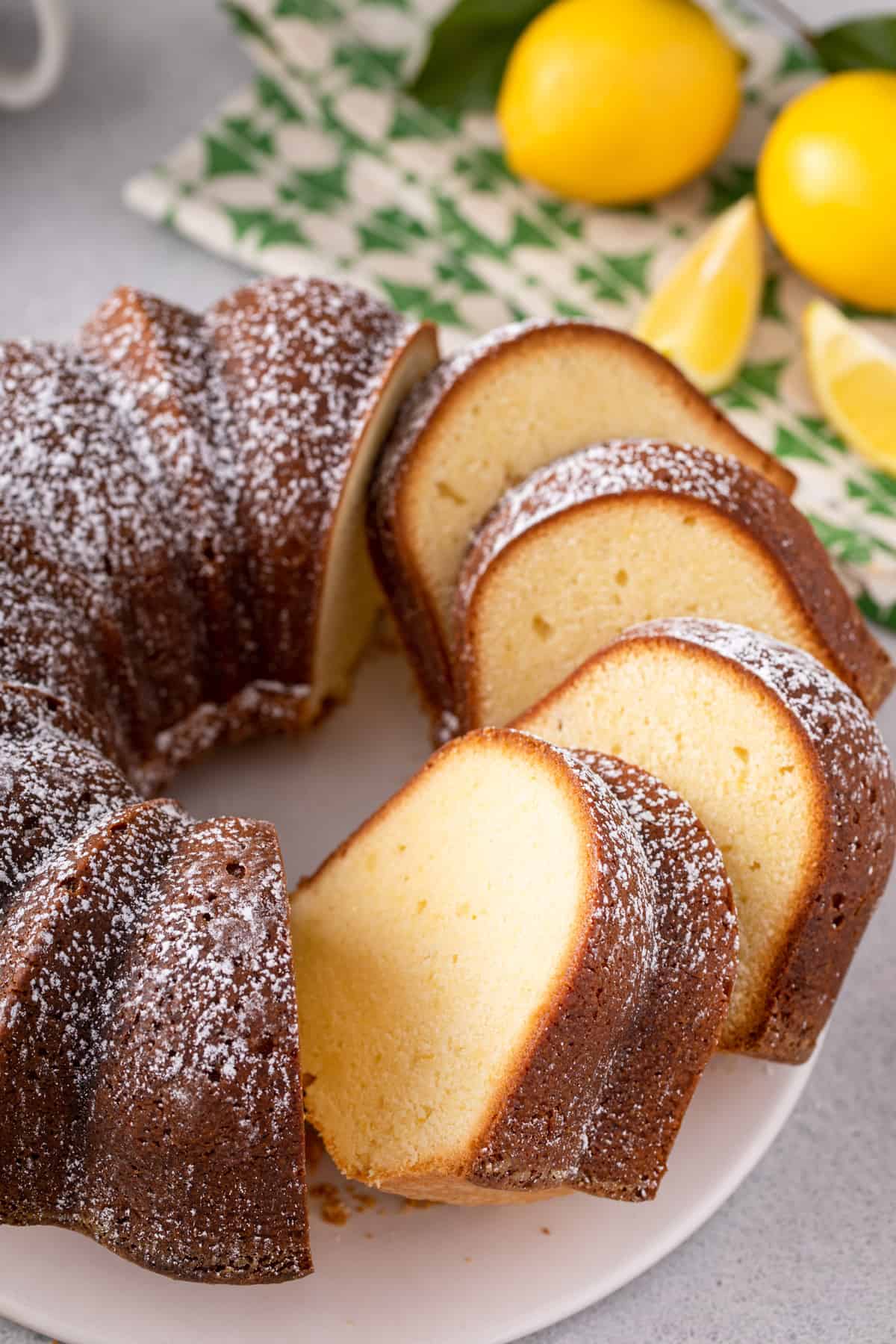
Lemon Cream Cheese Pound Cake
A dense, buttery pound cake enriched with cream cheese and brightened with fresh lemon zest. It bakes to a tender, tight crumb and finishes with a tangy lemon glaze that sets into a thin, glossy shell.
🥘Ingredients
For the Cake
For the Lemon Glaze
👨🍳Directions
🔧Equipment
📊Nutrition Facts (per serving)
📝Notes
Watch Video Of How Lemon Cream Cheese Pound Cake Works
This lemon cream cheese pound cake is the one I bring when I want something that works for a crowd without a lot of fuss, whether it is a birthday, a cookout, or a holiday table. It slices clean, holds up on a platter for hours, and the lemon keeps it from feeling too heavy after a big meal. I keep the ingredients on hand so I can say yes when someone asks me to bring dessert.
❓ Frequently Asked Questions About Lemon Cream Cheese Pound Cake
1. Why does this lemon cream cheese pound cake use both butter and cream cheese?
Each fat does a different job. Butter brings the flavor and the tender, fine crumb people expect from a pound cake, while cream cheese adds moisture and a slight tang that keeps the loaf from tasting flat. Together they produce a cake that slices cleanly but stays soft for days. Skipping the cream cheese and using all butter works, though the texture will be drier and the lemon flavor reads sharper.
2. Can I use bottled lemon juice instead of fresh?
Fresh juice is worth the extra minute here. Bottled juice has a duller flavor and often carries a faint preservative taste that becomes more noticeable in a simple cake like this. You need both the juice and the zest, and the zest is where most of the lemon aroma actually lives. If you are out of fresh lemons, a couple of tablespoons of bottled juice will keep the cake from failing, but add a little extra zest from another citrus if you have it.
3. How do I keep the cake from sticking to the pan?
Pound cakes bake for a long time, which gives the sugar and butter plenty of opportunity to weld themselves to the pan. Grease the pan thoroughly with softened butter, getting into every corner and the center tube, then dust it with flour and tap out the excess. A strip of parchment across the bottom is cheap insurance. Let the cake rest in the pan for about 10 minutes after it comes out of the oven, then run a thin knife around the edges and invert it onto a rack. Waiting until it is fully cool usually means the cake tears.
4. Why did my cake turn out dense and heavy?
Most pound cake failures come down to temperature and mixing. Butter and cream cheese that are still cold will not cream properly with the sugar, so the batter never traps enough air. Let both sit out for at least an hour before you start. Overmixing once the flour goes in is the other common culprit, since it develops gluten and toughens the crumb. Stop as soon as the last streaks of flour disappear. An oven that runs hot will also set the crust before the center rises, so check with an instant-read thermometer if you suspect yours is off.
5. How should I store the cake, and can I freeze it?
Keep it at room temperature under a cake dome or loosely wrapped in foil for up to three days. Plastic wrap alone can trap moisture and soften the crust, so foil or a domed keeper is a better choice. For longer storage, wrap slices or the whole cooled cake tightly in two layers of plastic and then foil, and freeze for up to two months. Thaw at room temperature still wrapped so the condensation forms on the packaging instead of the cake. Slices refresh nicely with 10 to 15 seconds in the microwave.
