
ginger beer recipe

The Best ginger beer recipe
The health benefits have been a big draw too. Ginger is packed with anti-inflammatory properties, which means it’s great for digestion and can help soothe an upset stomach. The natural sugars in the recipe are a lot healthier than many store-bought options, and the lack of artificial preservatives makes it a guilt-free pick for when we’re hosting a small gathering or just treating ourselves. My family loves it because it’s light but still satisfying, and it’s something we can make ahead—perfect for when we’re hosting a backyard barbecue or just want a quick, easy drink for the kids. Plus, it’s so easy to customize. Add a splash of lime or orange juice, a pinch of cayenne for heat, or even a touch of honey if you prefer something sweeter. It’s that kind of recipe that feels like a comfort in every way—simple, adaptable, and always a hit.
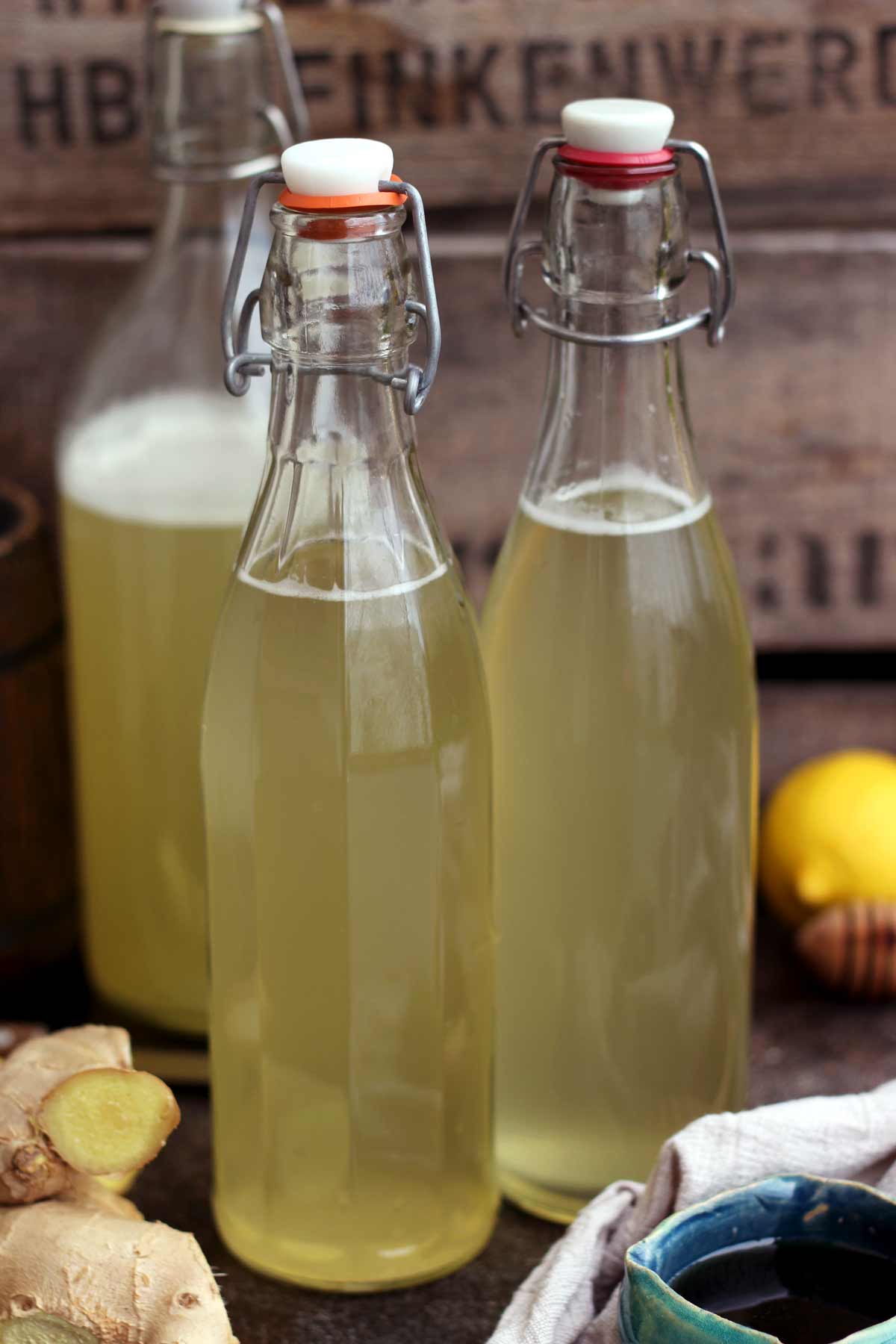
Homemade Ginger Beer Recipe
A refreshing, fizzy ginger beer made with natural ingredients, perfect for sipping on its own or as a mixer for cocktails. This recipe is a must-try for any occasion.
🥘Ingredients
- 4 cups water
- 1 cup sugar (or honey for a natural sweetener)
- 1 tbsp dried ginger (or 2 tbsp fresh grated ginger)
- 1 tsp salt
- 1 tbsp lemon juice
- 1 bottle (750 ml) natural ginger beer yeast or kombucha starter (optional)
- 1 cup sparkling water or club soda (for carbonation)
👨🍳Directions
-
1
In a large glass jar, combine water, sugar, dried ginger, salt, and lemon juice. Stir until the sugar dissolves completely. -
2
Seal the jar with an airlock or a lid with a balloon. Place it in a warm, dark place (around 75–80°F / 24–27°C). Ferment for 24–48 hours, stirring occasionally. -
3
After fermentation, strain the liquid through a fine-mesh strainer into a clean bottle or container. Add the kombucha starter or ginger beer yeast if using, then seal with sparkling water or club soda to carbonate. -
4
Store in a cool, dark place for an additional 24–48 hours to allow carbonation to develop fully. Taste and adjust sweetness if needed. -
5
Once ready, bottle and refrigerate. Enjoy within 1–2 weeks for the best flavor.
🔧Equipment
- Large glass jar or fermentation vessel
- Clean airlock or lid with a balloon
- Siphon or funnel
- Fine-mesh strainer
- Wooden spoon
- Measuring cups and spoons
- Thermometer (optional)
📊Nutrition Facts (per serving)
📝Notes
- For a stronger ginger flavor, use fresh ginger (about 2 tbsp grated).
- If using kombucha starter, ensure it’s active and free of mold.
- Adjust sweetness by adding more sugar or honey if desired.
- For a non-alcoholic version, skip the yeast and rely solely on carbonation from sparkling water.
Watch Video Of How Homemade Ginger Beer Recipe Works
❓ Frequently Asked Questions About Ginger Beer
1. What is the primary difference between homemade ginger beer and store-bought ginger beer?
Homemade ginger beer is typically fresher, more flavorful, and free from artificial colors, preservatives, and excessive sugar. Store-bought versions often contain high-fructose corn syrup, artificial flavors, and stabilizers to extend shelf life. Additionally, homemade versions can be customized with additional spices, citrus, or natural sweeteners to suit your taste.
—
2. Can I make ginger beer without using ginger?
While ginger is the traditional base, you can still make a flavorful ginger beer substitute by using other spices like star anise, cinnamon, or cardamom. Some recipes even incorporate citrus zest (like lemon or orange) and a touch of vanilla for a similar tangy, effervescent drink. However, the depth of ginger flavor will be lost.
—
3. How long does it ferment for, and what affects the fizziness?
Ginger beer typically ferments for 12 to 24 hours at room temperature (around 70–75°F / 21–24°C) for best carbonation. Factors affecting fizziness include:
– Temperature: Warmer temps speed up fermentation, leading to more bubbles but potentially altering flavor.
– Starter culture: Using a ginger beer starter (like a small amount of the previous batch) helps kickstart fermentation.
– Sugar amount: More sugar = more yeast activity = more bubbles, but also a sweeter taste.
– Yeast strain: Some commercial yeast strains produce stronger effervescence than others.
—
4. Why is my ginger beer flat after fermentation?
Several reasons could cause flat ginger beer:
– Under-sweetened: Yeast needs sugar to produce CO₂; if the recipe lacks enough sweetener, fermentation slows down.
– Too cold: Slow fermentation at cooler temps reduces carbonation. Ferment in a warm, draft-free spot (like a kitchen counter).
– Yeast exhaustion: If the yeast runs out of sugar or oxygen, it stops producing CO₂. Check sugar levels and ensure proper aeration.
– Improper storage: If bottled too early or left in direct sunlight, carbonation can dissipate. Seal tightly and refrigerate after bottling.
– Lack of starter: Skipping the ginger beer starter (a small amount of the previous batch) can weaken fermentation.
—
5. Can I make ginger beer without a starter, and how?
Yes, you can make ginger beer without a starter, but it may take longer to ferment and produce less carbonation. Here’s how:
1. Use more sugar (about 1.5–2x the recipe) to feed the yeast.
2. Add a yeast booster: A pinch of active dry yeast (like baker’s yeast) or a commercial yeast starter (like Fleischmann’s) can help.
3. Increase fermentation time: Ferment for 24–48 hours instead of 12.
4. Use a higher sugar-to-water ratio (e.g., 1:1.5) to support yeast activity.
5. Aerate the mixture: Stirring or whisking before bottling helps incorporate oxygen for yeast growth.
Note: Without a starter, the flavor may be less complex, and carbonation may be inconsistent.
